Publications
Here you can find publications on the subject of climate change adaptation in different languages.
Please use the filter option to select your preferred language.
AIR CareAir pollution is a pressing issue for Pakistan, with major urban areas experiencing steadily worsening ambient air quality and rising public health concerns. Recognising the risks to human health and in alignment with the priorities of the Ministry of Climate Change and Environmental Coordination (MoCC&EC), AIRCARE project (funded by GIZ as an Eigenmaßnahme) complements the World Bank’s Punjab Clean Air Project (PCAP) by aligning its technical support with the chosen pollution sectors in Lahore Division, given the deepening air quality crisis. 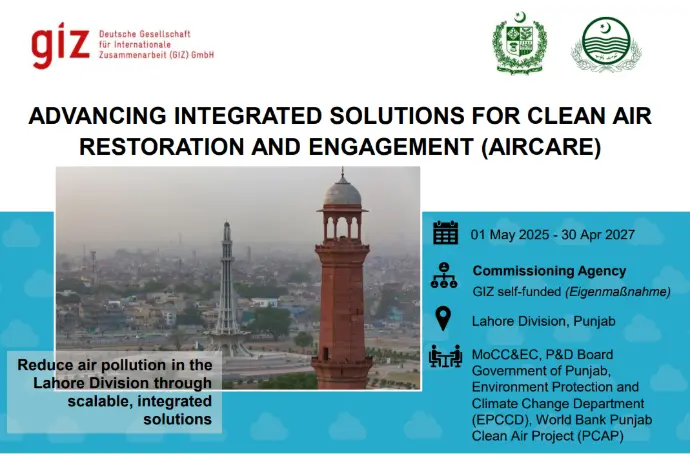
|
CRFClimate change-induced extreme weather events in Pakistan are inflicting an annual economic toll of approximately $4 billion USD. The 2022 flood exacerbated this crisis, disproportionately impacting impoverished areas and leaving 33 million people homeless. Over a million livestock perished, and up to 9.1 million people were pushed into poverty. Public financial assistance for emergency relief falls short, burdening citizens and businesses 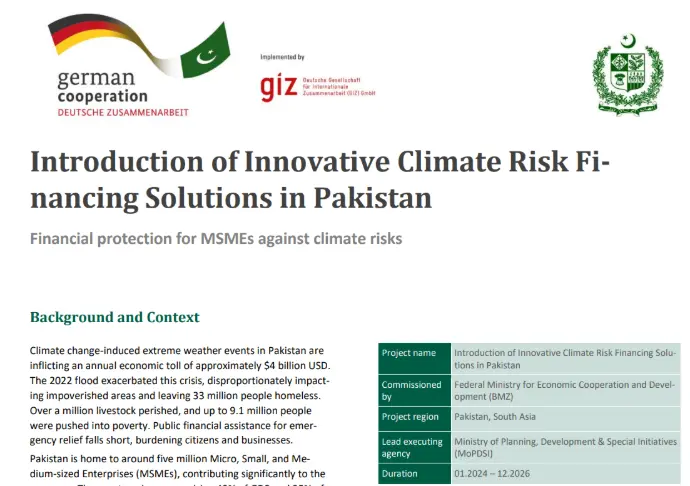
|
LT LEDSPakistan contributes less than 1% of global greenhouse gas emissions but is highly vulnerable to climate change. The country faces an increasing frequency and intensity of extreme events such as droughts, floods, forest fires, and storms, leading to significant economic losses, averaging EUR 4 billion per year by 2021. The 2022 floods alone caused property damage estimated at EUR 30 billion. Such climate disasters have also exacerbated existing gender inequities in the country. 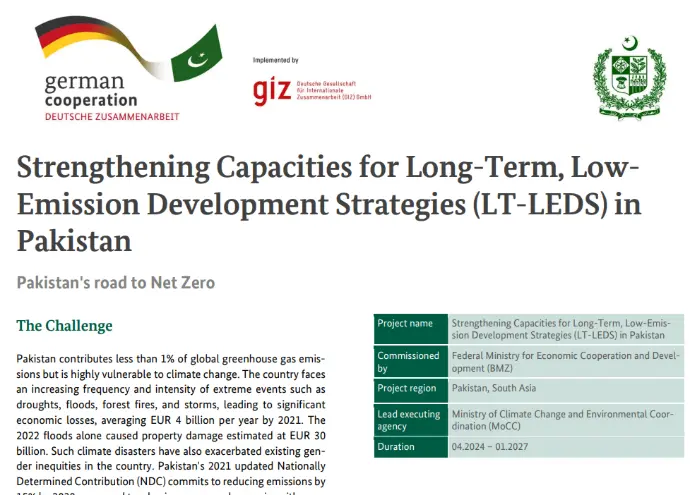
|
DEDIPakistan’s Nationally Determined Contribution (NDC) 3.0 commits the country to unconditionally reduce greenhouse gas emissions by 17 percent, compared to 2015 levels. In the energy sector, this requires increasing the share of on-grid renewable energy from around 30 percent today (including hydropower) to 60 percent by 2030. Achieving this transition places significant demands on the national power system. 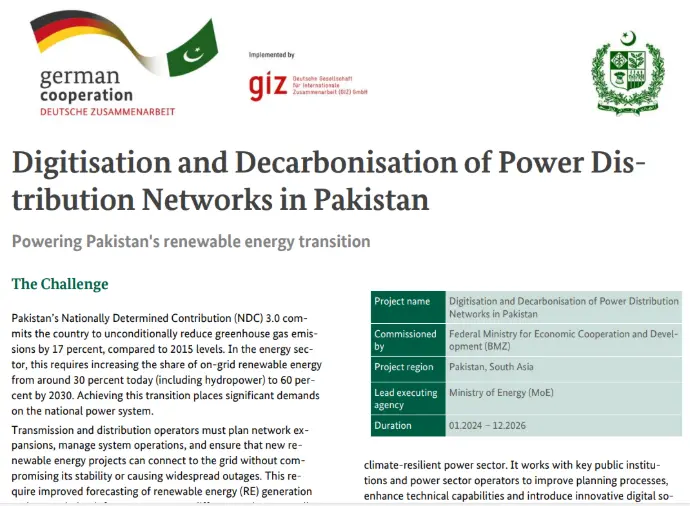
|
ETSAccording to the 2022 annual report of Pakistan's National Electric Power Regulatory Authority (NEPRA), 59% of the country's electricity mix consists of fossil fuels, 25% is hydropower, 7% comes from renewable sources (wind, solar, and biomass), and 9% is nuclear power. Besides power generation, agriculture, industry, and transport are among the sectors with the highest greenhouse gas (GHG) emissions in Pakistan. The industrial sector accounts for up to 37% of final energy consumption and around 30% of energy-related GHG emissions 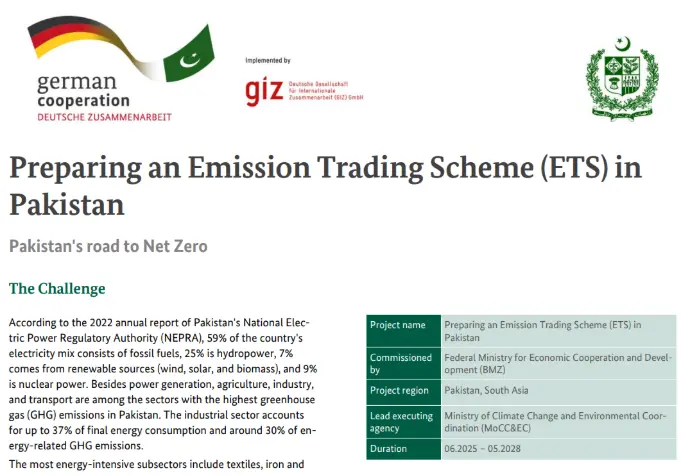
|
PGCEPA consistent and ambitious climate foreign policy is a key priority for the German government. Together with developing countries and emerging economies, Germany is working on achieving the goals of the Paris Agreement, which are aimed at limiting the rise in global temperature to 1.5 degrees Celsius. The ambition of the cooperation focuses on both mitigation and adaptation 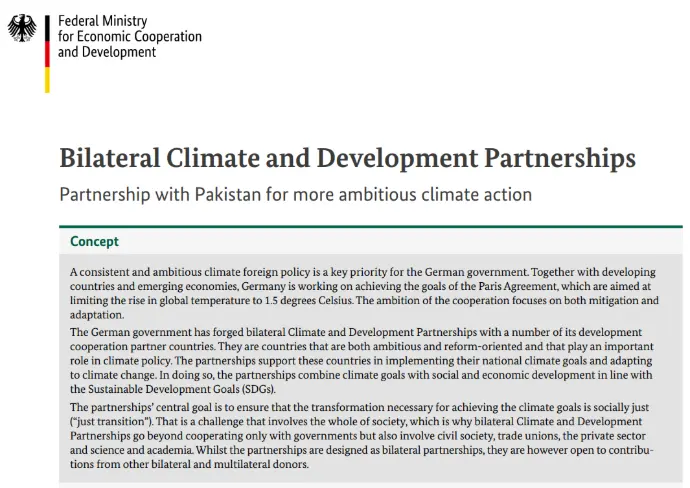
|
GIDRMDisasters claim human lives, destroy livelihoods, lead to the destruction of ecosystems, and are often still felt by societies years later.This was illustrated by the COVID-19 pandemic. In our increasingly interconnected world, climate change exacerbates disaster impacts in societies across all sectors. The economic loss due to extreme events and disasters has more than doubled in the past three decades. This trend further exacerbates existing inequalities as the human cost of disasters falls overwhelmingly on low- to middle-income countries. At the same time, an increase in disasters and disaster losses are predicted. 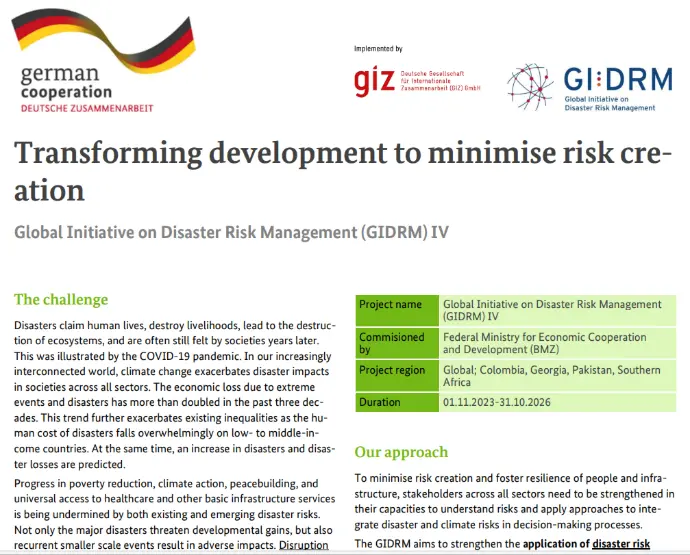
|
NAPPakistan is increasingly vulnerable to climate-induced disasters,with floods and storms causing annual losses of about €4 billion.For instance, the 2022 floods caused property damages amounting to €30 billion. Compounding this instability, the recent 2025 floods have again displaced millions, devastated infrastructure, worsened food and water insecurity. These crises have disrupted health and power systems and heightened social and economic inequalities. Women and marginalised groups are disproportionately affected, due to heightened risks of displacement, limited access to resources, safe shelter, healthcare and as well as increased caregiving burdens during crises. 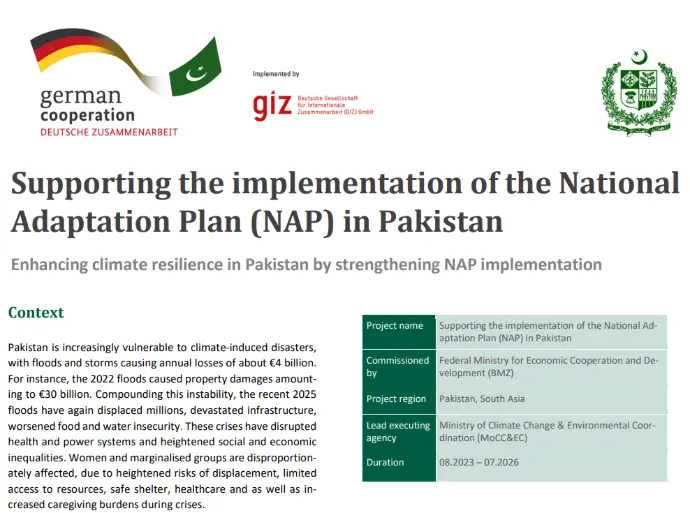
|
REEE Scale IIThe National Energy Efficiency and Conservation Authority (NEECA) serves as the lead executing agency for the project. Project also collaborates with intermediaries, such as provincial energy efficiency agencies, to anchor EnMS in municipal organisations and to promote the development of energy efficiency and organisational frameworks 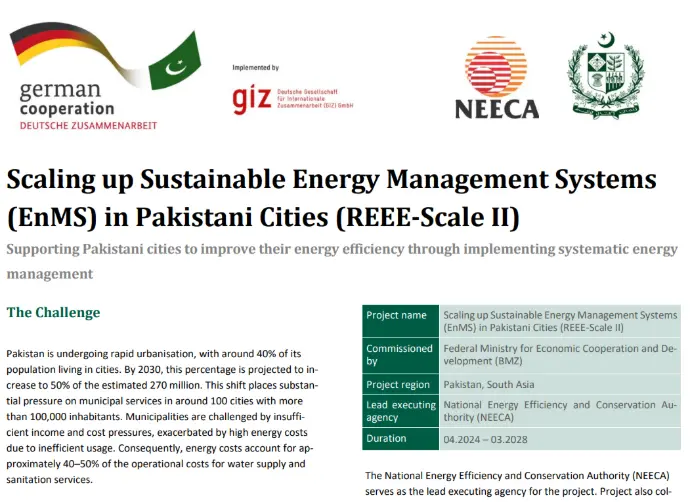
|
Project brief climate proofing of projects KPGIZ is supporting the implementation of NAP in Pakistan and as part of this program, it has partnered with NIUIP - UET Peshawar through a grant agreement titled Climate Proofing of Project Proposals to enhance climate-resilient planning and implementation. The project aims to equip public and private actors with the tools and knowledge to develop climate-proof plans and designs while supporting in the capacity building of KP government departments climate change adaptation. 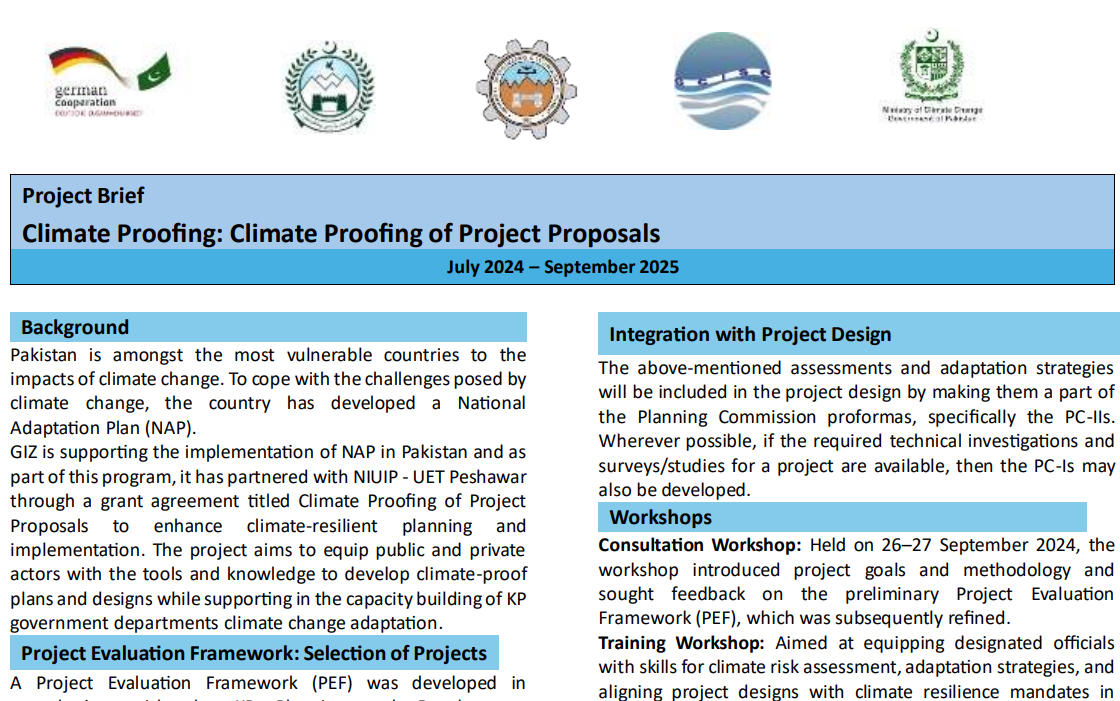
|
Climate Governance Planning (2025)The Taskforce on Climate Governance and Planning provides technical assistance throughout the climate change management cycle. It prioritises policy coherence and collaboration, institutional strengthening, gender integration, and incorporation of climate risk information into development planning and implementation. 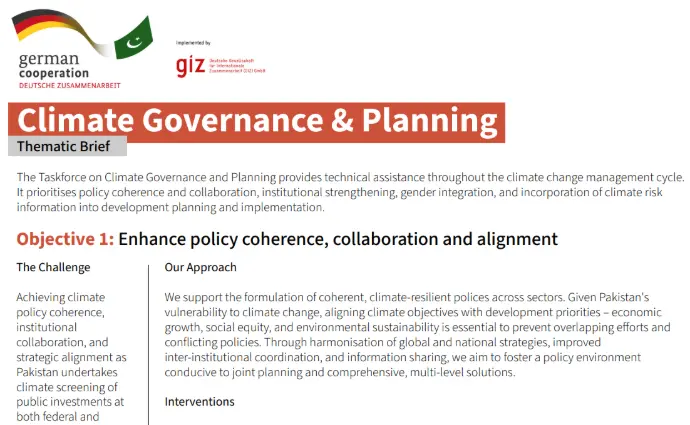
|
Project brief climate proofing of projects PunjabGIZ is supporting the implementation of NAP in Pakistan and as part of this program, it has partnered with NIUIP - UET Peshawar through a grant agreement titled Climate Proofing of Project Proposals to enhance climate-resilient planning and implementation. The project aims to equip public and private actors with the tools and knowledge to develop climate-proof plans and designs while supporting in the capacity building of KP government departments climate change adaptation.
|
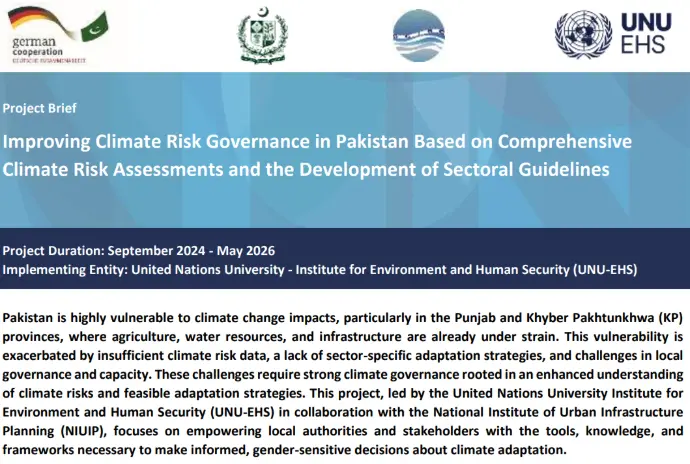
Project Brief Development of sectoral guidelines PakistanThe project aims to strengthen climate governance by:
|
Adaptation Challenge Fund (2024)The Adaptation Challenge Fund was launched in 2023 under the Strengthening Climate Adaptation and Resilience (SAR) project to promote and seed-fund innovative ideas that leverage financial instruments to support climate adaptation and risk management. The aim was to enhance the climate resilience of vulnerable communities in Pakistan through scalable financial models. Funded by the German Federal Ministry for Economic Cooperation and Development (BMZ) and supported by Deutsche Gesellschaft für Internationale Zusammenarbeit (GIZ) GmbH, the ACF provides grants for the piloting of innovative project proposals that help local communities adapt to climate change. 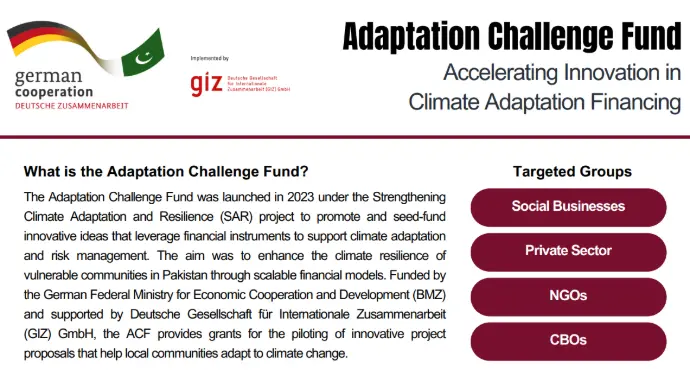
|
Project Brief Development of sectoral guidelines PakistanThe project aims to strengthen climate governance by:
|
Financing Climate Action (2024)The Financing Climate Action (FCA) taskforce addresses the critical need for financial support to adapt and mitigate climate change by enhancing institutional capacities and developing innovative tools. It aims to enable better access to international climate finance and provide financial protection to vulnerable communities, fostering resilience and sustainability. 
|
Climate Finance FacilitiesClimate finance, also known as green financing, refers to financial resources mobilized for climate action, including mitigation, adaptation, sustainable development, and just transition. The international climate finance architecture consists of various dedicated and general-purpose funding avenues, categorized into UNFCCC-based, non-UNFCCC-based, and private or market-driven funds. 
|
Energy Transition in the Textile Sector
Pakistan relies heavily on export earnings from its national textile industry. Not only does this sector make a significant contribution to the gross domestic product, but it is also one of the biggest employers in the country. Any downturn in this vital sector is likely to carry serious economic and social consequences. 
|
Greening the Macro Economic RegimePakistan relies heavily on export earnings from its national textile industry. Not only does this sector make a significant contribution to the gross domestic product, but it is also one of the biggest employers in the country. Any downturn in this vital sector is likely to carry serious economic and social consequences. 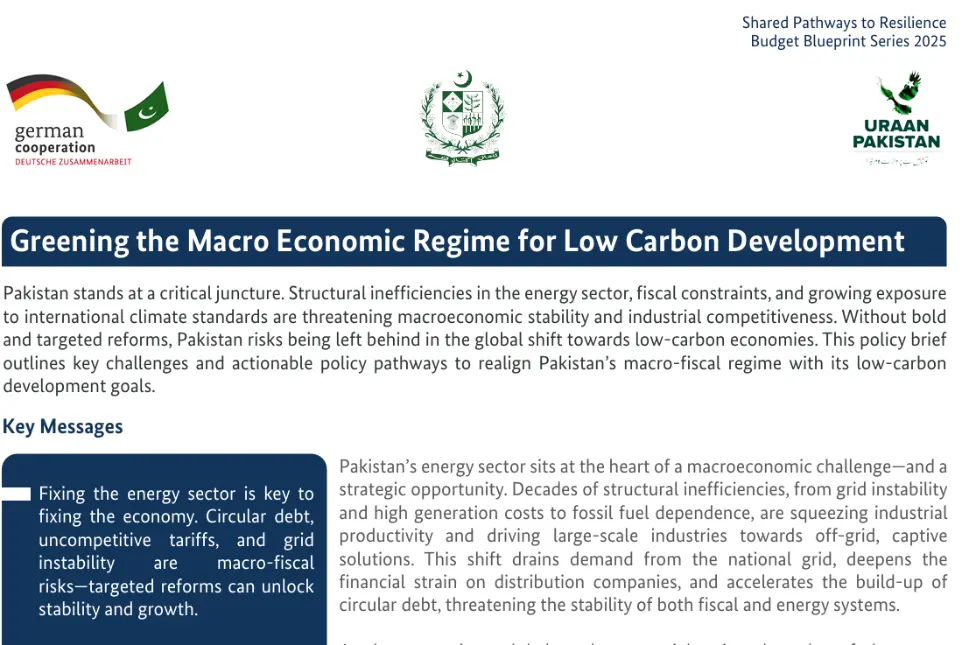
|
Scaling the Potential of MHPPs in PakistanPakistan relies heavily on export earnings from its national textile industry. Not only does this sector make a significant contribution to the gross domestic product, but it is also one of the biggest employers in the country. Any downturn in this vital sector is likely to carry serious economic and social consequences. 
|
Urban FloodsPakistan relies heavily on export earnings from its national textile industry. Not only does this sector make a significant contribution to the gross domestic product, but it is also one of the biggest employers in the country. Any downturn in this vital sector is likely to carry serious economic and social consequences. 
|
Mainstreaming Green Skills for Climate AdaptationThe project ensures sustainability through institutionalization, capacity building, and policy engagement. Curricula will be submitted to TVETA/NAVTTC for formal integration, ensuring ongoing education of engineers and artisans. Draft amendments to KP LUBCA building bye-laws, along with policy recommendations and case studies, will sustain demand for trained professionals and encourage the development of climate-resilient public infrastructure. 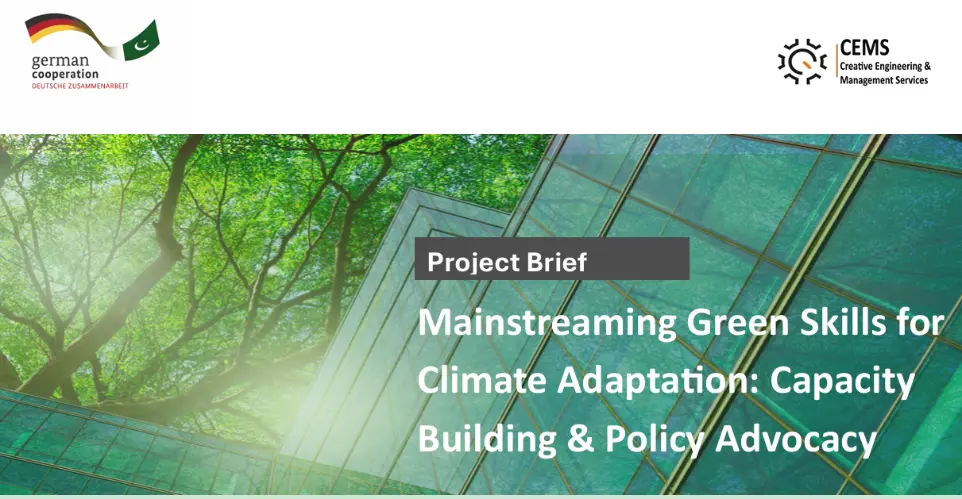
|
Kabul River Early Warning SystemKhyber Pakhtunkhwa faces escalating climate-driven hazards, including riverine floods, flash floods, extreme rainfall, and heat stress. These threats compromise lives, livelihoods, and critical infrastructure . Traditional reactive approaches are insufficient. KREWS presents a proactive, integrated, and anticipatory system focused on real-time monitoring, predictive modeling, and community engagement for timely data-driven decisions. 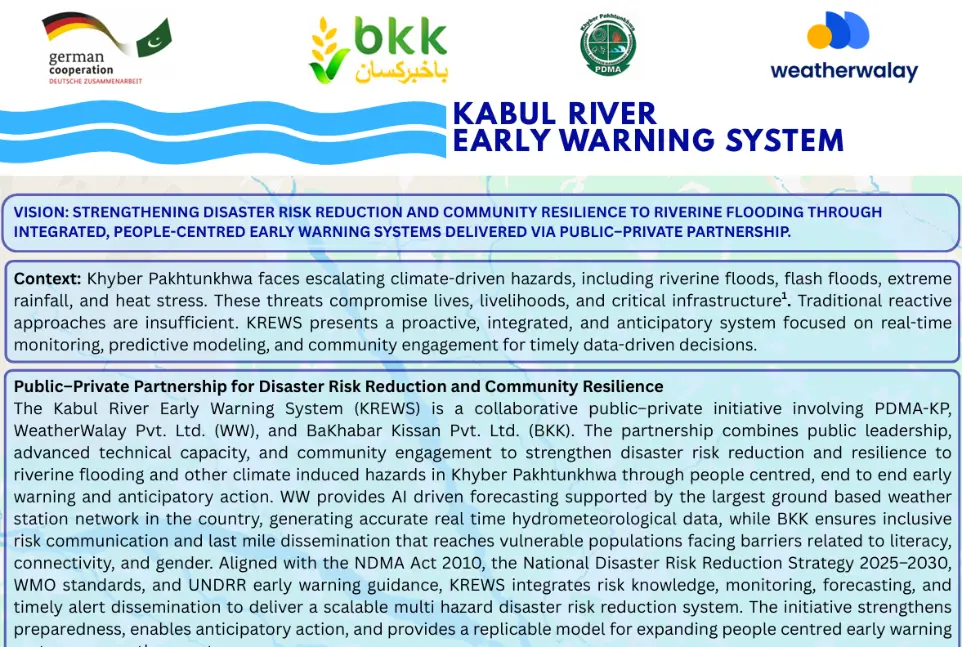
|
Capacity Development for Flood Resilient Infrastructure for Safer Communities in Khyber Pakhtunkhwa (KP)Khyber Pakhtunkhwa faces escalating climate threats—in cluding heat, erratic rainfall, floods, and glacial melt—wors ened by weak institutions, poor infrastructure, and social ex clusion. Dera Ismail Khan (DI Khan), Charsadda, and Swat each face distinct hazards, requiring context-specific capacity building, climate-resilient infrastructure, inclusive planning, na ture-based solutions, and stronger community preparedness and early warning systems. 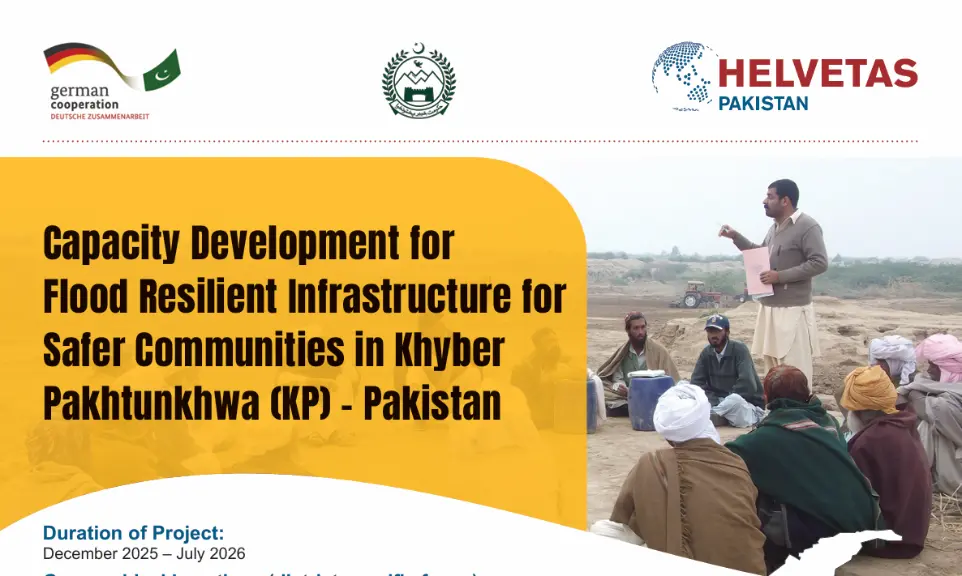
|
Capacity Development for Climate Resilient Infrastructure
Timeframe: December 2025 – July 2026 
|
Powering Progress On Gender-Inclusive Energy Solutions For Rural PakistanIn Pakistan’s rural heartlands, millions of women carry the weight of unpaid care work, limiting their access to education, income, and autonomy. According to the Pakistan Bureau of Statistics (2022), rural women spend an average of 5.5 hours daily on unpaid domestic and care work—nearly five times more than men. 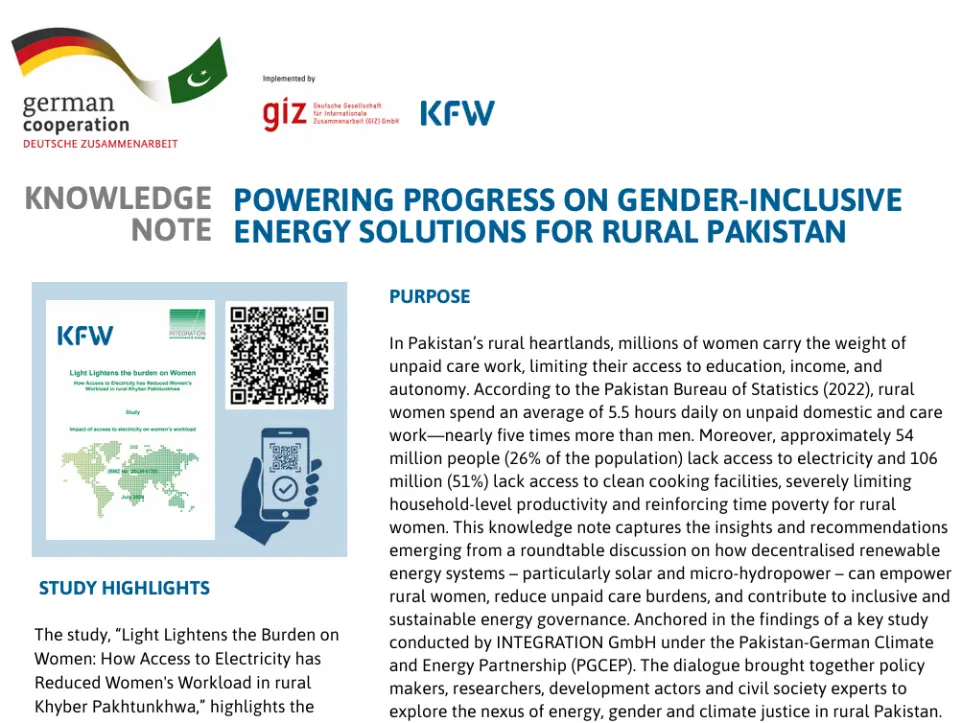
|
Battery Energy Storage SystemApplications and impact on demand defection in Power Sector The global energy landscape undergoes a transformation, defined by the dual imperatives of decarbonization and ensuring grid reliability. Pakistan's power sector is undergoing a rapid transformation driven by the adoption of variable renewable energy (VRE), electric vehicle and distribution generation. 
|
Decarbonising Pakistan's Textile SectorPolicy Interventions for Decarbonisation and Market Leadership Pakistan's Textile industry is the backbone of its economy Contributing nearly two-third of the national export earnings and employing around 15 million people. Yet this economic engine is at risk. The sector is highly energy-intensive and dependent on fossil fuel, making it the second-largest contributor to greenhouse gas (GHG) emission within the country's industrial sector 
|
Energy Transition in the Textile Sector
The Way Forward through Electricity Market Reforms 
|
Greening the Macro Economic Regime for Low Carbon DevelopmentPakistan stands at a critical juncture. Structural inefficiencies in the energy sector, fiscal constraints, and growing exposure to international climate standards are threatening macroeconomic stability and industrial competitiveness. Without bold and targeted reforms, Pakistan risks being left behind in the global shift towards low-carbon economies. This policy brief outlines key challenges and actionable policy pathways to realign Pakistan’s macro-fiscal regime with its low-carbon development goals. 
|
Transforming Pakistan’s Building and Construction Sector for a Sustainable FuturePakistan’s rapid urbanisation has created an urgent demand for housing while contributing significantly to energy consumption and greenhouse gas emissions from the construction and building sectors. 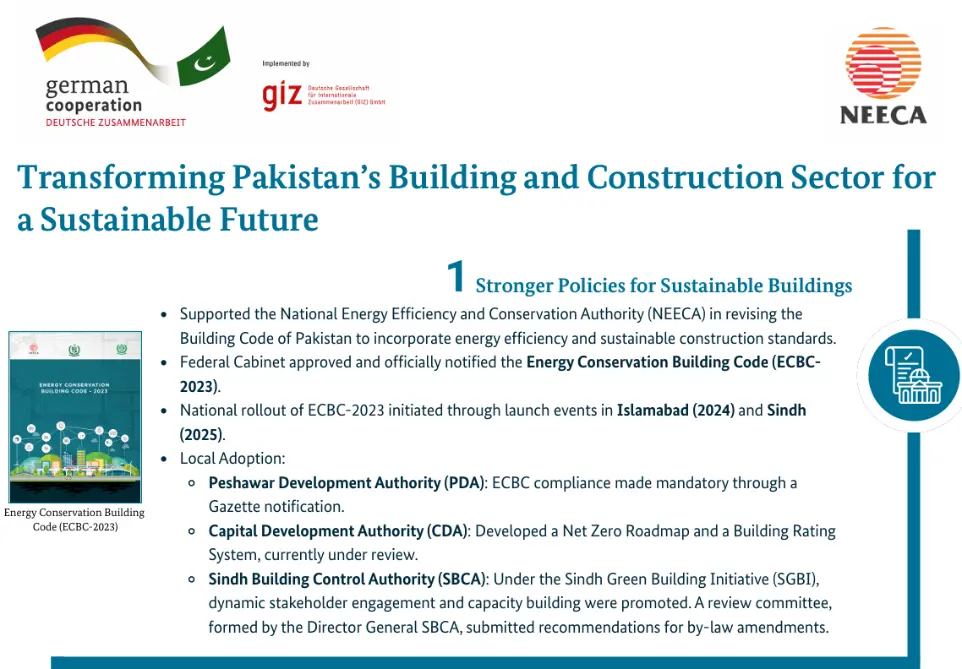
|
Funding Landscape and Opportunities for SMEs and Startups in Pakistan’s Climate Sector
Pakistan offers a microcosm of the challenges and opportunities fa
cing climate-adaptation finance across developing markets. After a
record-breaking USD 365 million in venture capital (VC) inflows in
2021, funding fell by ~90 % through 2024 as global liquidity tightened
and US aid support withdrew 
|
Strengthening Climate Adaptation And Resilience
Aligning International Climate Finance to National Priorities in Pakistan: Localisation in Practice 
|
Study on the Digital Appraisal System
Incorporating Climate Resilience and Gender Criteria
into the Project Life Cycle of Pakistan
|
Enabling Environment for Risk-Informed Development (EE4RID)
Building a Systematic
Understanding of Risk
|
Pakistan Integrated Energy Model (PAK-IEM 2.0)
Pakistan energy sector is at a critical juncture, Rapid population growth, urbanization, rising demand for cooling, mobility, and industrial output, combined with high dependence on imported fossil fuel, place increasing pressure on energy affordability, security, and public finance 
|
Pakistan Long Term Energy Planning – TIMES model and capacity developmentAchieving optimal investments and resource combinations to ensure energy security, decarbonisation, and improved economic outcomes — while facilitating a fair and just energy transition — requires comprehensive and multifaceted analysis. In this context, this project seeks to strengthen Pakistan’s existing knowledge base by developing new modeling tools, building capacity, and conducting an in depth scenario assessment of the country's energy transition. 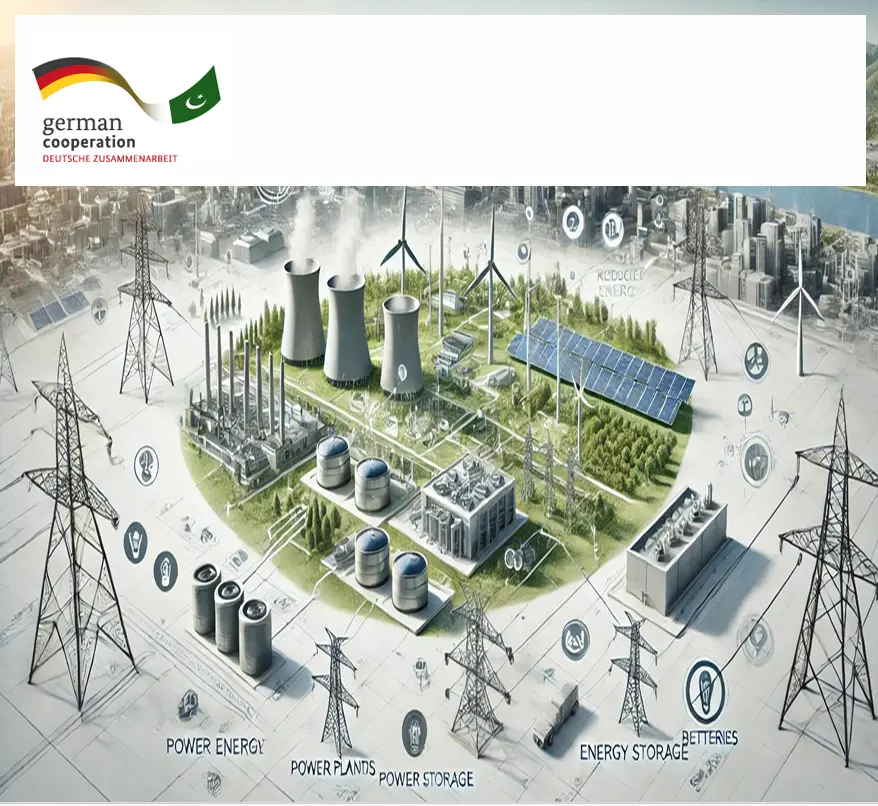
|
Assessment of climate-related risks
The impacts associated with slow onset processes1 (e. g. sea
level rise, desertification, salinisation) and extreme weather
events (e. g. floods, cyclones, storm surges, heatwaves) are
increasing in frequency and / or intensity in many regions of
the world, resulting in growing climate-related risks. 
|
Climate Risk Assessment for Ecosystem-based Adaptation
A guidebook for planners and practitioners 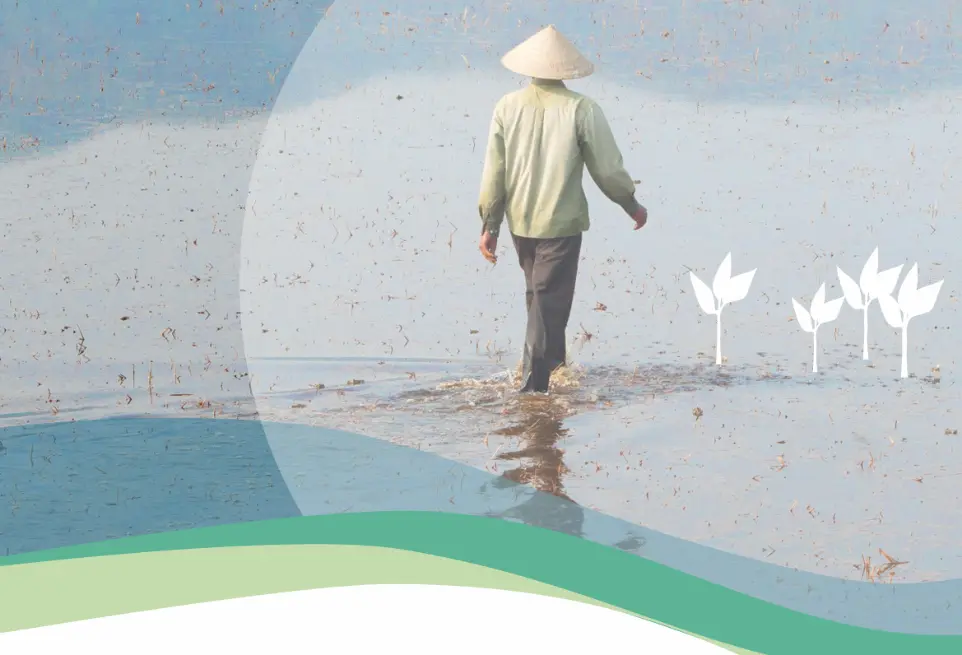
|
Selecting Climate Risk Assessment Methods, Data, and Supporting Materials
In this Catalogue, you will find boxes where you can add your examples to add to then
Knowledge about climate resilience. Your suggestions will help other users produce
meaningful and practical adaptation action. Your ideas may be included in future revisions of this document and will help PIEVC develop new tools to support this work. 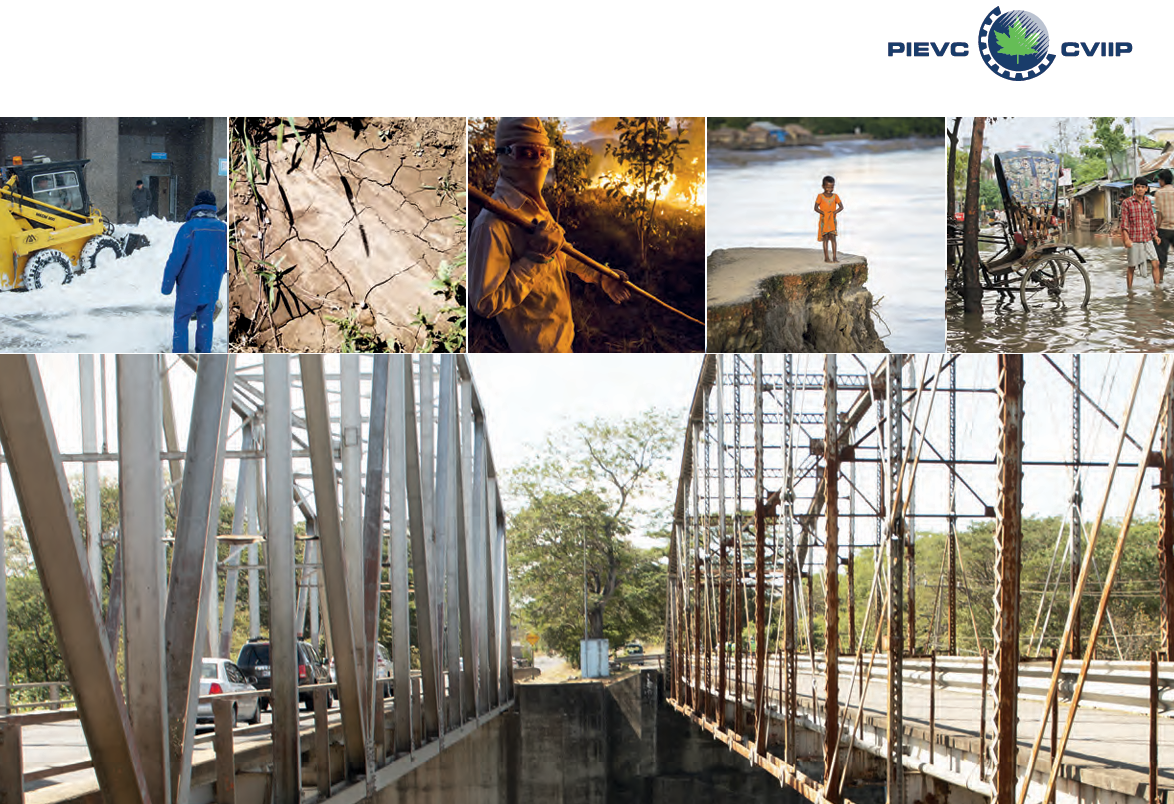
|
Climate Risk Management
Promising pathways to avert, minimise, and address losses and damages 
|
Risk Supplement to the Vulnerability SourcebookThe GIZ Vulnerability Sourcebook offers a concept and step-by-step guidelines for standardised assessments of vulnerability to climate change. Published in 2014, it has since been widely put to use for vulnerability assessments in the framework of climate change adaptation planning from the local to the national level. 
|
Risk Supplement to the Vulnerability SourcebookThe GIZ Vulnerability Sourcebook offers a concept and step-by-step guidelines for standardised assessments of vulnerability to climate change. Published in 2014, it has since been widely put to use for vulnerability assessments in the framework of climate change adaptation planning from the local to the national level.
|
AIR CareAir pollution is a pressing issue for Pakistan, with major urban areas experiencing steadily worsening ambient air quality and rising public health concerns. Recognising the risks to human health and in alignment with the priorities of the Ministry of Climate Change and Environmental Coordination (MoCC&EC), AIRCARE project (funded by GIZ as an Eigenmaßnahme) complements the World Bank’s Punjab Clean Air Project (PCAP) by aligning its technical support with the chosen pollution sectors in Lahore Division, given the deepening air quality crisis.
|
CRFClimate change-induced extreme weather events in Pakistan are inflicting an annual economic toll of approximately $4 billion USD. The 2022 flood exacerbated this crisis, disproportionately impacting impoverished areas and leaving 33 million people homeless. Over a million livestock perished, and up to 9.1 million people were pushed into poverty. Public financial assistance for emergency relief falls short, burdening citizens and businesses
|
LT LEDSPakistan contributes less than 1% of global greenhouse gas emissions but is highly vulnerable to climate change. The country faces an increasing frequency and intensity of extreme events such as droughts, floods, forest fires, and storms, leading to significant economic losses, averaging EUR 4 billion per year by 2021. The 2022 floods alone caused property damage estimated at EUR 30 billion. Such climate disasters have also exacerbated existing gender inequities in the country.
|
DEDIPakistan’s Nationally Determined Contribution (NDC) 3.0 commits the country to unconditionally reduce greenhouse gas emissions by 17 percent, compared to 2015 levels. In the energy sector, this requires increasing the share of on-grid renewable energy from around 30 percent today (including hydropower) to 60 percent by 2030. Achieving this transition places significant demands on the national power system.
|
ETSAccording to the 2022 annual report of Pakistan's National Electric Power Regulatory Authority (NEPRA), 59% of the country's electricity mix consists of fossil fuels, 25% is hydropower, 7% comes from renewable sources (wind, solar, and biomass), and 9% is nuclear power. Besides power generation, agriculture, industry, and transport are among the sectors with the highest greenhouse gas (GHG) emissions in Pakistan. The industrial sector accounts for up to 37% of final energy consumption and around 30% of energy-related GHG emissions
|
PGCEPA consistent and ambitious climate foreign policy is a key priority for the German government. Together with developing countries and emerging economies, Germany is working on achieving the goals of the Paris Agreement, which are aimed at limiting the rise in global temperature to 1.5 degrees Celsius. The ambition of the cooperation focuses on both mitigation and adaptation
|
GIDRMDisasters claim human lives, destroy livelihoods, lead to the destruction of ecosystems, and are often still felt by societies years later.This was illustrated by the COVID-19 pandemic. In our increasingly interconnected world, climate change exacerbates disaster impacts in societies across all sectors. The economic loss due to extreme events and disasters has more than doubled in the past three decades. This trend further exacerbates existing inequalities as the human cost of disasters falls overwhelmingly on low- to middle-income countries. At the same time, an increase in disasters and disaster losses are predicted.
|
NAPPakistan is increasingly vulnerable to climate-induced disasters,with floods and storms causing annual losses of about €4 billion.For instance, the 2022 floods caused property damages amounting to €30 billion. Compounding this instability, the recent 2025 floods have again displaced millions, devastated infrastructure, worsened food and water insecurity. These crises have disrupted health and power systems and heightened social and economic inequalities. Women and marginalised groups are disproportionately affected, due to heightened risks of displacement, limited access to resources, safe shelter, healthcare and as well as increased caregiving burdens during crises.
|
REEE Scale IIThe National Energy Efficiency and Conservation Authority (NEECA) serves as the lead executing agency for the project. Project also collaborates with intermediaries, such as provincial energy efficiency agencies, to anchor EnMS in municipal organisations and to promote the development of energy efficiency and organisational frameworks
|
Project brief climate proofing of projects KPGIZ is supporting the implementation of NAP in Pakistan and as part of this program, it has partnered with NIUIP - UET Peshawar through a grant agreement titled Climate Proofing of Project Proposals to enhance climate-resilient planning and implementation. The project aims to equip public and private actors with the tools and knowledge to develop climate-proof plans and designs while supporting in the capacity building of KP government departments climate change adaptation.
|
Climate Governance Planning (2025)The Taskforce on Climate Governance and Planning provides technical assistance throughout the climate change management cycle. It prioritises policy coherence and collaboration, institutional strengthening, gender integration, and incorporation of climate risk information into development planning and implementation.
|
Project brief climate proofing of projects PunjabGIZ is supporting the implementation of NAP in Pakistan and as part of this program, it has partnered with NIUIP - UET Peshawar through a grant agreement titled Climate Proofing of Project Proposals to enhance climate-resilient planning and implementation. The project aims to equip public and private actors with the tools and knowledge to develop climate-proof plans and designs while supporting in the capacity building of KP government departments climate change adaptation.
|
Project Brief Development of sectoral guidelines PakistanThe project aims to strengthen climate governance by:
|
Adaptation Challenge Fund (2024)The Adaptation Challenge Fund was launched in 2023 under the Strengthening Climate Adaptation and Resilience (SAR) project to promote and seed-fund innovative ideas that leverage financial instruments to support climate adaptation and risk management. The aim was to enhance the climate resilience of vulnerable communities in Pakistan through scalable financial models. Funded by the German Federal Ministry for Economic Cooperation and Development (BMZ) and supported by Deutsche Gesellschaft für Internationale Zusammenarbeit (GIZ) GmbH, the ACF provides grants for the piloting of innovative project proposals that help local communities adapt to climate change.
|
Project Brief Development of sectoral guidelines PakistanThe project aims to strengthen climate governance by:
|
Financing Climate Action (2024)The Financing Climate Action (FCA) taskforce addresses the critical need for financial support to adapt and mitigate climate change by enhancing institutional capacities and developing innovative tools. It aims to enable better access to international climate finance and provide financial protection to vulnerable communities, fostering resilience and sustainability.
|
Climate Finance FacilitiesClimate finance, also known as green financing, refers to financial resources mobilized for climate action, including mitigation, adaptation, sustainable development, and just transition. The international climate finance architecture consists of various dedicated and general-purpose funding avenues, categorized into UNFCCC-based, non-UNFCCC-based, and private or market-driven funds.
|
Energy Transition in the Textile Sector
Pakistan relies heavily on export earnings from its national textile industry. Not only does this sector make a significant contribution to the gross domestic product, but it is also one of the biggest employers in the country. Any downturn in this vital sector is likely to carry serious economic and social consequences.
|
Greening the Macro Economic RegimePakistan relies heavily on export earnings from its national textile industry. Not only does this sector make a significant contribution to the gross domestic product, but it is also one of the biggest employers in the country. Any downturn in this vital sector is likely to carry serious economic and social consequences.
|
Scaling the Potential of MHPPs in PakistanPakistan relies heavily on export earnings from its national textile industry. Not only does this sector make a significant contribution to the gross domestic product, but it is also one of the biggest employers in the country. Any downturn in this vital sector is likely to carry serious economic and social consequences.
|
Urban FloodsPakistan relies heavily on export earnings from its national textile industry. Not only does this sector make a significant contribution to the gross domestic product, but it is also one of the biggest employers in the country. Any downturn in this vital sector is likely to carry serious economic and social consequences.
|
Mainstreaming Green Skills for Climate AdaptationThe project ensures sustainability through institutionalization, capacity building, and policy engagement. Curricula will be submitted to TVETA/NAVTTC for formal integration, ensuring ongoing education of engineers and artisans. Draft amendments to KP LUBCA building bye-laws, along with policy recommendations and case studies, will sustain demand for trained professionals and encourage the development of climate-resilient public infrastructure.
|
Kabul River Early Warning SystemKhyber Pakhtunkhwa faces escalating climate-driven hazards, including riverine floods, flash floods, extreme rainfall, and heat stress. These threats compromise lives, livelihoods, and critical infrastructure . Traditional reactive approaches are insufficient. KREWS presents a proactive, integrated, and anticipatory system focused on real-time monitoring, predictive modeling, and community engagement for timely data-driven decisions.
|
Capacity Development for Flood Resilient Infrastructure for Safer Communities in Khyber Pakhtunkhwa (KP)Khyber Pakhtunkhwa faces escalating climate threats—in cluding heat, erratic rainfall, floods, and glacial melt—wors ened by weak institutions, poor infrastructure, and social ex clusion. Dera Ismail Khan (DI Khan), Charsadda, and Swat each face distinct hazards, requiring context-specific capacity building, climate-resilient infrastructure, inclusive planning, na ture-based solutions, and stronger community preparedness and early warning systems.
|
Capacity Development for Climate Resilient Infrastructure
Timeframe: December 2025 – July 2026
|
Powering Progress On Gender-Inclusive Energy Solutions For Rural PakistanIn Pakistan’s rural heartlands, millions of women carry the weight of unpaid care work, limiting their access to education, income, and autonomy. According to the Pakistan Bureau of Statistics (2022), rural women spend an average of 5.5 hours daily on unpaid domestic and care work—nearly five times more than men.
|
Battery Energy Storage SystemApplications and impact on demand defection in Power Sector The global energy landscape undergoes a transformation, defined by the dual imperatives of decarbonization and ensuring grid reliability. Pakistan's power sector is undergoing a rapid transformation driven by the adoption of variable renewable energy (VRE), electric vehicle and distribution generation.
|
Decarbonising Pakistan's Textile SectorPolicy Interventions for Decarbonisation and Market Leadership Pakistan's Textile industry is the backbone of its economy Contributing nearly two-third of the national export earnings and employing around 15 million people. Yet this economic engine is at risk. The sector is highly energy-intensive and dependent on fossil fuel, making it the second-largest contributor to greenhouse gas (GHG) emission within the country's industrial sector
|
Energy Transition in the Textile Sector
The Way Forward through Electricity Market Reforms
|
Greening the Macro Economic Regime for Low Carbon DevelopmentPakistan stands at a critical juncture. Structural inefficiencies in the energy sector, fiscal constraints, and growing exposure to international climate standards are threatening macroeconomic stability and industrial competitiveness. Without bold and targeted reforms, Pakistan risks being left behind in the global shift towards low-carbon economies. This policy brief outlines key challenges and actionable policy pathways to realign Pakistan’s macro-fiscal regime with its low-carbon development goals.
|
Transforming Pakistan’s Building and Construction Sector for a Sustainable FuturePakistan’s rapid urbanisation has created an urgent demand for housing while contributing significantly to energy consumption and greenhouse gas emissions from the construction and building sectors.
|
Funding Landscape and Opportunities for SMEs and Startups in Pakistan’s Climate Sector
Pakistan offers a microcosm of the challenges and opportunities fa
cing climate-adaptation finance across developing markets. After a
record-breaking USD 365 million in venture capital (VC) inflows in
2021, funding fell by ~90 % through 2024 as global liquidity tightened
and US aid support withdrew
|
Strengthening Climate Adaptation And Resilience
Aligning International Climate Finance to National Priorities in Pakistan: Localisation in Practice
|
Study on the Digital Appraisal System
Incorporating Climate Resilience and Gender Criteria
into the Project Life Cycle of Pakistan
|
Enabling Environment for Risk-Informed Development (EE4RID)
Building a Systematic
Understanding of Risk
|
Pakistan Integrated Energy Model (PAK-IEM 2.0)
Pakistan energy sector is at a critical juncture, Rapid population growth, urbanization, rising demand for cooling, mobility, and industrial output, combined with high dependence on imported fossil fuel, place increasing pressure on energy affordability, security, and public finance
|
Pakistan Long Term Energy Planning – TIMES model and capacity developmentAchieving optimal investments and resource combinations to ensure energy security, decarbonisation, and improved economic outcomes — while facilitating a fair and just energy transition — requires comprehensive and multifaceted analysis. In this context, this project seeks to strengthen Pakistan’s existing knowledge base by developing new modeling tools, building capacity, and conducting an in depth scenario assessment of the country's energy transition.
|
Assessment of climate-related risks
The impacts associated with slow onset processes1 (e. g. sea
level rise, desertification, salinisation) and extreme weather
events (e. g. floods, cyclones, storm surges, heatwaves) are
increasing in frequency and / or intensity in many regions of
the world, resulting in growing climate-related risks.
|
Climate Risk Assessment for Ecosystem-based Adaptation
A guidebook for planners and practitioners
|
Selecting Climate Risk Assessment Methods, Data, and Supporting Materials
In this Catalogue, you will find boxes where you can add your examples to add to then
Knowledge about climate resilience. Your suggestions will help other users produce
meaningful and practical adaptation action. Your ideas may be included in future revisions of this document and will help PIEVC develop new tools to support this work.
|
Climate Risk Management
Promising pathways to avert, minimise, and address losses and damages
|
Risk Supplement to the Vulnerability SourcebookThe GIZ Vulnerability Sourcebook offers a concept and step-by-step guidelines for standardised assessments of vulnerability to climate change. Published in 2014, it has since been widely put to use for vulnerability assessments in the framework of climate change adaptation planning from the local to the national level.
|
Risk Supplement to the Vulnerability SourcebookThe GIZ Vulnerability Sourcebook offers a concept and step-by-step guidelines for standardised assessments of vulnerability to climate change. Published in 2014, it has since been widely put to use for vulnerability assessments in the framework of climate change adaptation planning from the local to the national level.
|